
The Weight of the World: From Headlines to the Pump
When a major conflict like the war in Iran breaks out, the ripples are felt almost instantly. We see it first at the gas station.
As of March 2026, global oil supplies have been severely disrupted, particularly with the closure of the Strait of Hormuz. Its effects have been felt all over the world. In the U.S., prices have jumped significantly, with some regions seeing costs rise by 30% in a single week.
But the impact isn't just financial. It’s psychological.
- The "Media Stress-Bath": Constant updates on military movements and geopolitical tension keep our nervous systems in a state of "high alert."
- Financial Anxiety: Rising costs for commuting and goods create a persistent, low-level hum of worry about the future and our ability to meet our goals.
- A Sense of Helplessness and Hopelessness: When global events feel out of our control, it’s natural to feel a sense of "crisis fatigue," where we become overwhelmed by the sheer scale of the world’s problems.

How Global Stress Affects Our State of Mind
When we are exposed to prolonged uncertainty, our brains often shift into "survival mode." This triggers the amygdala—the part of the brain responsible for the fight-or-flight response.
In this state, our stress levels spike, our sleep quality often drops, and our ability to focus on long-term goals is compromised. We become reactive rather than proactive. We might find ourselves snapping at loved ones, feeling paralyzed by our to-do lists, or losing sight of the "why" behind our daily hard work.
Finding Your Anchor: The Power of Mindful Meditation
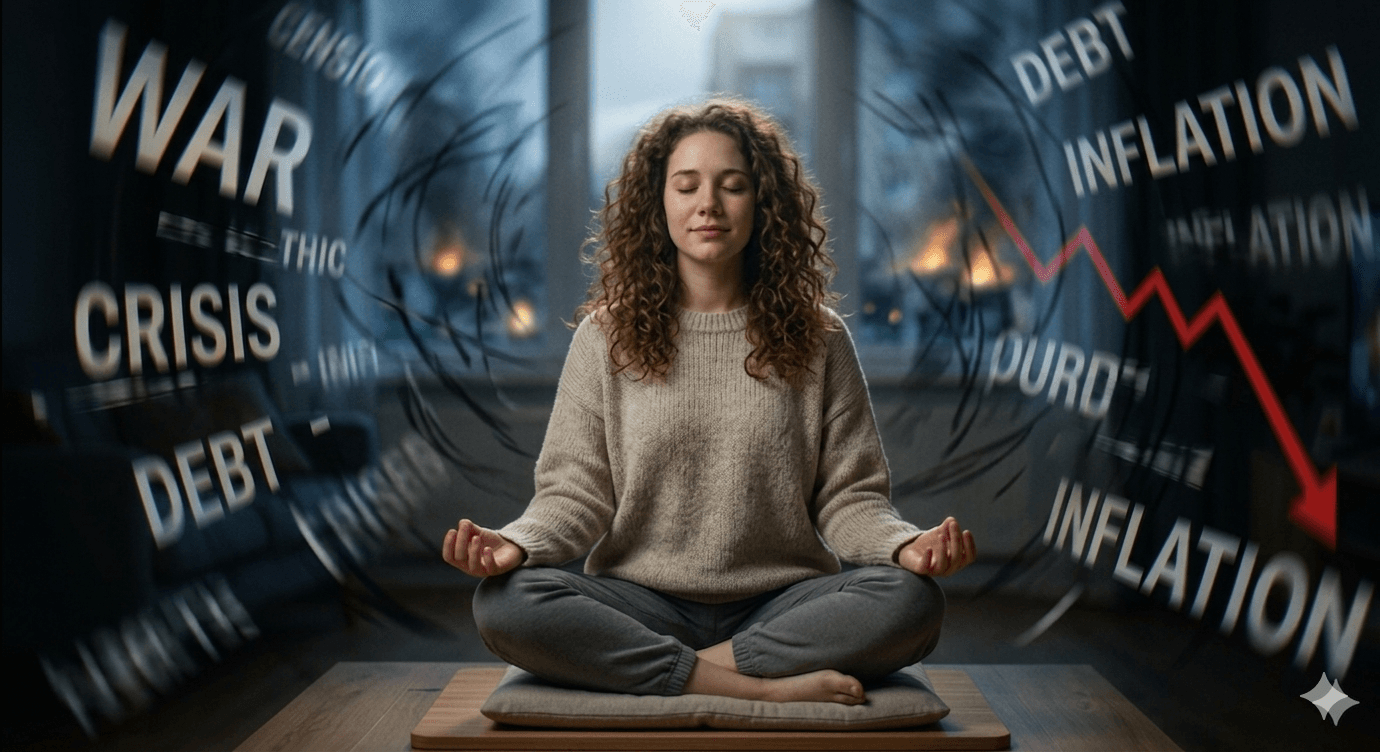
While we cannot control the price of gas or the movements of nations, we can control our internal response to them. Mindful meditation isn't about ignoring reality; it’s about building the emotional resilience to navigate it.
1. Grounding in the Present Moment - Anxiety lives in the "what ifs" of the future. Mindfulness pulls you back to the "what is" of right now. By focusing on your breath or the sensation of your feet on the floor, you send a signal to your nervous system that—in this exact second—you are safe. This lowers cortisol levels and clears the "mental fog" of worry.
2. Creating a "Mindful Pause" - When you see a stressful headline or a high price at the pump, try to catch the spiral of thoughts before it takes over. Observe the thought — "Everything is getting so expensive" — and then imagine it as a cloud passing through the sky. You acknowledge it without letting it define your entire day.
3. Regaining Strength to Achieve Your Goals - Equanimity (mental calmness) is a competitive advantage. When you are grounded, you can make better decisions for your business, your family, and your personal growth. Instead of being drained by global chaos, meditation helps you conserve that energy for the things that actually move the needle in your life.
Building a Support Network
Having a strong support network is essential in navigating modern challenges. Whether it's friends, family, or professional counselors, having people to talk to can provide emotional relief and practical advice.
Sharing your experiences with others can help you feel less isolated and more understood, which is crucial in managing stress effectively.
Embracing Work-Life Balance
Achieving a healthy work-life balance is key to reducing stress. This involves setting boundaries between work and personal time, ensuring you have space to relax and recharge. Consider implementing strategies such as:
- Scheduled Downtime: Allocate specific times for relaxation and hobbies.
- Technology Breaks: Disconnect from electronic devices at certain times to unwind.
- Flexible Work Arrangements: Explore options like remote work or flexible hours if possible.

Moving Forward with Balance
The world in 2026 is complex, but your inner world doesn't have to be. By dedicating even five or ten minutes a day to a guided meditation or a simple breathing exercise, you aren't just "relaxing"—you are training your brain to stay steady in a storm.
Next Step:
To begin managing stress today, start by reclaiming your immediate environment through a "Digital Sunset" — set a firm time this evening to disconnect from news feeds and social media to lower your cortisol levels. Complement this by practicing a 5-minute grounding exercise: sit quietly and identify five things you can see, four you can touch, three you can hear, two you can smell, and one you can taste. This simple sensory check-in pulls your brain out of "survival mode" and back into the present. Finally, write down one singular goal for tomorrow; by narrowing your focus to one actionable task, you replace the paralysis of global uncertainty with a sense of personal agency and direction.