Why Does My Terrarium Fog Up? How to Fix Condensation, Mold and Yellow Leaves
A foggy terrarium usually means there's more water inside than the plants and air can hold, often made worse by direct sun or a sealed lid. A little condensation in the morning that clears by midday is normal and healthy. Constant fog, fuzzy white growth, or yellowing leaves are signs to open the lid, move the container out of direct sun, and water less.
If you just set up your first closed terrarium and the glass has gone cloudy, nothing has gone wrong yet. A terrarium is a tiny water cycle in a jar: moisture leaves the soil and the leaves, hits the cool glass, and runs back down. Fog is that cycle made visible. The question is only whether it's a healthy rhythm or a stuck one.
Is condensation in a terrarium normal or a problem?
Use the clearing test. Look at the glass in the morning and again in the afternoon.
- Healthy: mist forms overnight or after watering, then mostly clears during the day. You can see your plants at least part of the time.
- Too wet: the glass is fogged all day, every day, and you can't see through it. Water may be beading and running constantly, or pooling at the bottom.
- Too dry: no condensation at all for days, soil pulling away from the glass, leaves crisping at the edges.
A closed terrarium that never fogs is as much of a signal as one that always does. You're aiming for the in-between: a soft haze that comes and goes.
Why is my terrarium always foggy?
Three causes account for most permanent fog, and they often show up together.
Too much water. First-time owners usually overwater, because watering feels like caring. In a sealed container, water has nowhere to go. There's no evaporation out of the system, so whatever you add stays.
Direct sunlight. A terrarium on a south-facing windowsill heats up fast. Warm air holds more moisture, then the glass surface stays cooler than the air inside, and you get a greenhouse that cooks. Bright indirect light is what most terrarium plants want.
No air exchange. Even a closed terrarium benefits from being opened periodically. Stagnant, saturated air is where mold gets comfortable.
The fix for all three is patience rather than intervention. Take the lid off, move the container, and then leave it alone for a week instead of adjusting something every day.
How do I fix terrarium problems by symptom?
Find your symptom, try the first fix, and give it a week before changing anything else. Changing three variables at once means you'll never know which one mattered.
| Symptom | Likely cause | What to do |
|---|---|---|
| Glass fogged all day | Too much water, or too much heat | Remove the lid for 1–3 days until the glass clears. Move out of direct sun. |
| Water pooling at the base | Overwatering, or no drainage layer | Leave the lid off and let it dry down. Tilt gently to pour off standing water if you can do it without disturbing roots. |
| Fuzzy white or grey growth | Mold in stagnant, wet conditions | Remove the affected material with a cotton swab or tweezers. Open the lid for a few days to increase airflow. Remove any dead leaves it was feeding on. |
| Leaves turning yellow and soft | Roots sitting in water | Stop watering entirely. Vent the container. Trim yellowed leaves so they don't rot in place. |
| Leaves turning yellow and crisp | Too much direct light, or too dry | Move to bright indirect light. Mist lightly if the soil is dry below the surface. |
| Leggy, stretched stems | Not enough light | Move somewhere brighter, still out of direct sun. Pinch back long growth. |
| Green film on the inside of the glass | Algae from light plus moisture | Wipe the inside of the glass with a clean cloth. Reduce light slightly and water less. |
| Mushy, blackened stems at soil level | Rot, usually advanced overwatering | Remove the affected plant so it doesn't spread. Let the substrate dry considerably before replanting. |
| Everything looks fine but nothing grows | Low light, or the terrarium is simply settled | Give it more indirect light. Slow growth in a closed terrarium is often normal, not a failure. |
How often should I water a closed terrarium?
Much less often than you'd expect. A well-balanced closed terrarium can go weeks or months between waterings, because the water inside recirculates rather than evaporating away.
Water when the substrate looks dry below the top layer and you've seen no condensation for several days in a row. When you do water, use a spray bottle or a small amount poured against the side of the glass — not a generous pour from a watering can. It is far easier to add a little water next week than to remove it today.
Open containers are different. They lose moisture to the room, so they need checking more like a regular houseplant.
How do I prevent mold in a terrarium?
Mold needs three things: moisture, stillness, and something dead to eat. You can usually take away at least two.
- Remove fallen leaves and spent blooms when you see them. Decaying plant matter is the usual starting point.
- Vent regularly. Taking the lid off for a few hours once a week does a lot of quiet work.
- Don't pack plants tightly. Leaves pressed against glass or against each other stay wet.
- Start clean. Rinsed substrate and a washed container give mold less of a head start.
A small patch of white fuzz in a new terrarium is common and often passes on its own as the system balances. Persistent, spreading mold means the environment is too wet, not that the terrarium is doomed.
Does the container itself make a difference?
It does. Shape affects airflow, light, and how much water the system holds. A tall, narrow vessel with a small opening traps more moisture than a wide, open bowl. Thick glass stays cooler; thin glass follows the room temperature more closely.
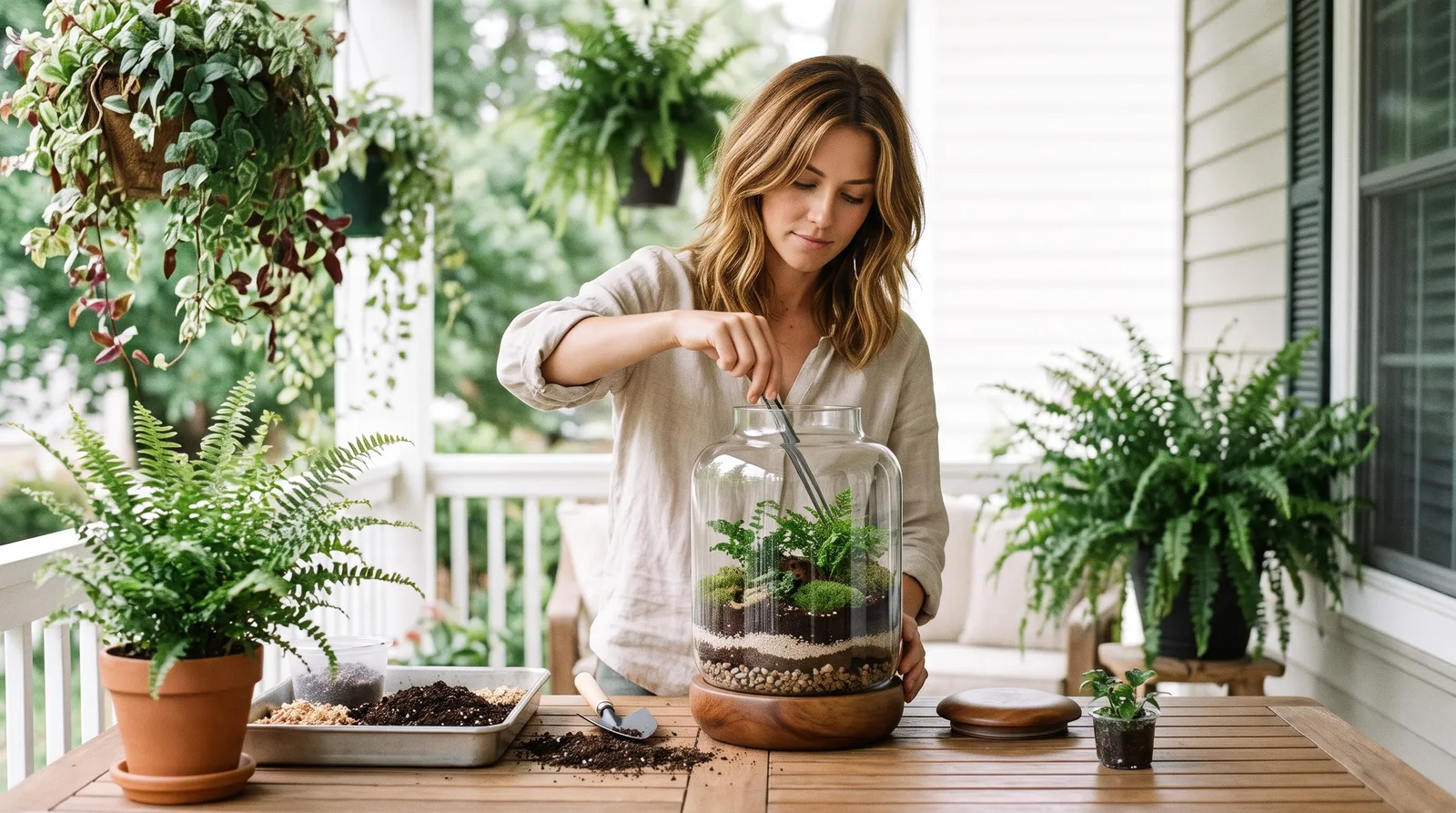
If you're assembling your first one, a clear container with a removable lid gives you the most control, because venting becomes a thirty-second adjustment rather than a project. The glass terrariums we make at NoctisCorvus are built with that kind of everyday handling in mind — easy to open, easy to see into, easy to leave alone once it's settled. The last part is the hardest.
What's the takeaway?
Most terrarium trouble is the same trouble wearing different clothes: too much water, not enough air. Read the glass in the morning, resist the urge to water on a schedule, and give each change a week to show its results.
A terrarium rewards restraint more than effort, which is a useful thing to have sitting on a shelf where you can see it.
Frequently asked questions
Should I keep the lid on or off my terrarium?
Keep it on most of the time for a closed terrarium, since that's what maintains the internal water cycle. Take it off for a few hours weekly for airflow, or for a day or two at a stretch if the glass stays fogged all day.
Can I wipe the condensation off the inside of the glass?
Yes, and it's helpful if you want to see your plants. Just know that wiping treats the view rather than the cause — if the fog returns within hours, the terrarium still holds too much water.
Will mold in my terrarium hurt the plants?
A small amount of surface mold on decaying leaves usually doesn't harm healthy plants and often fades as the terrarium balances. Spreading mold paired with mushy stems means conditions are too wet and need venting.
How much light does a terrarium need?
Bright indirect light suits most common terrarium plants. Direct sun through glass can overheat the container quickly, while a dim corner leads to stretched, leggy growth.
How long does it take a terrarium to balance out?
Often a few weeks. New terrariums commonly go through a period of heavy condensation and minor mold before settling, so give changes time before adjusting again.